A guide for patients and families considering transcranial magnetic stimulation. Use it to prepare for a conversation with your treating team.
Patient education. General education, primarily for adults. This information does not determine eligibility, replace informed consent or provide a personal treatment plan. Your treating team’s advice and current device instructions take precedence.
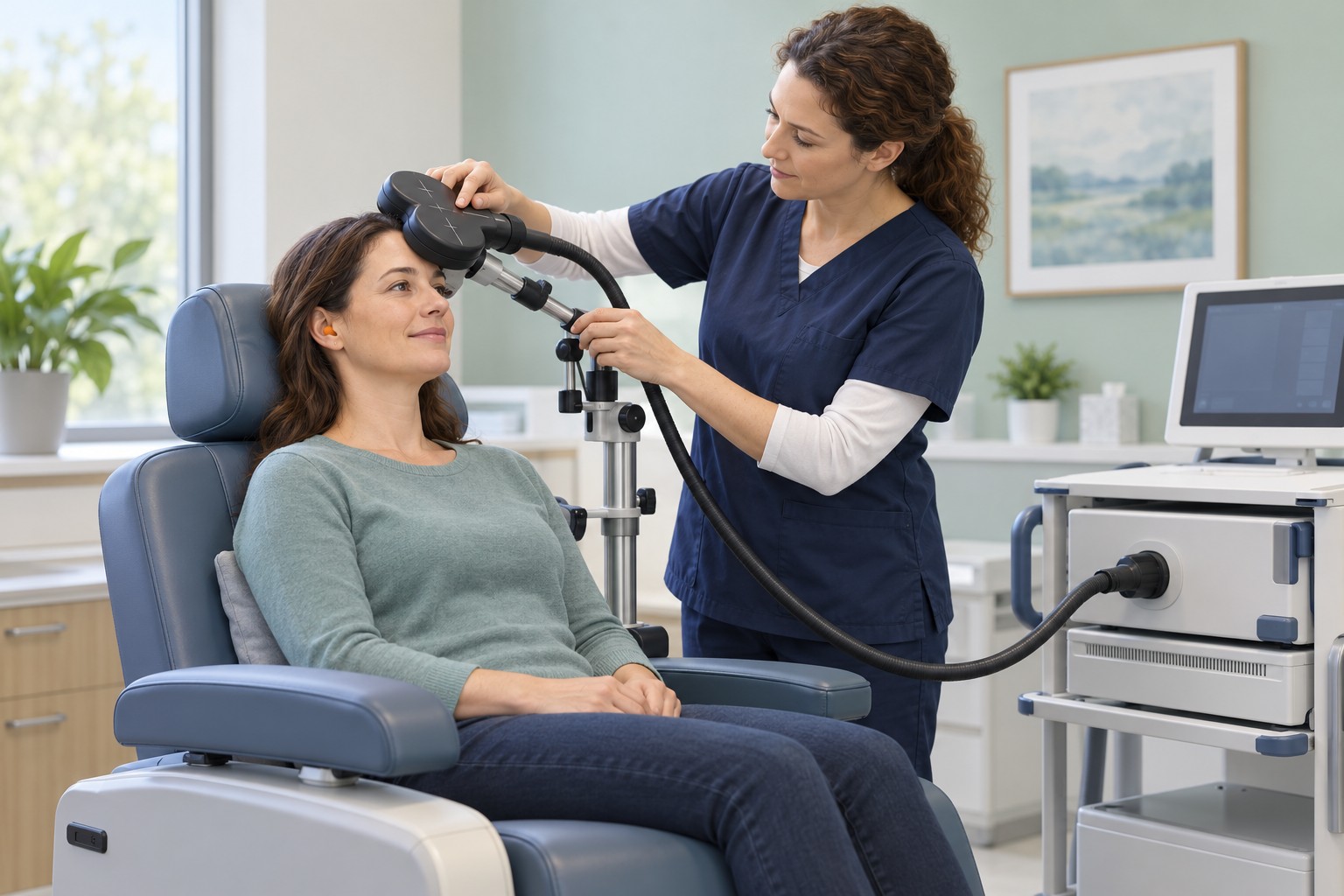
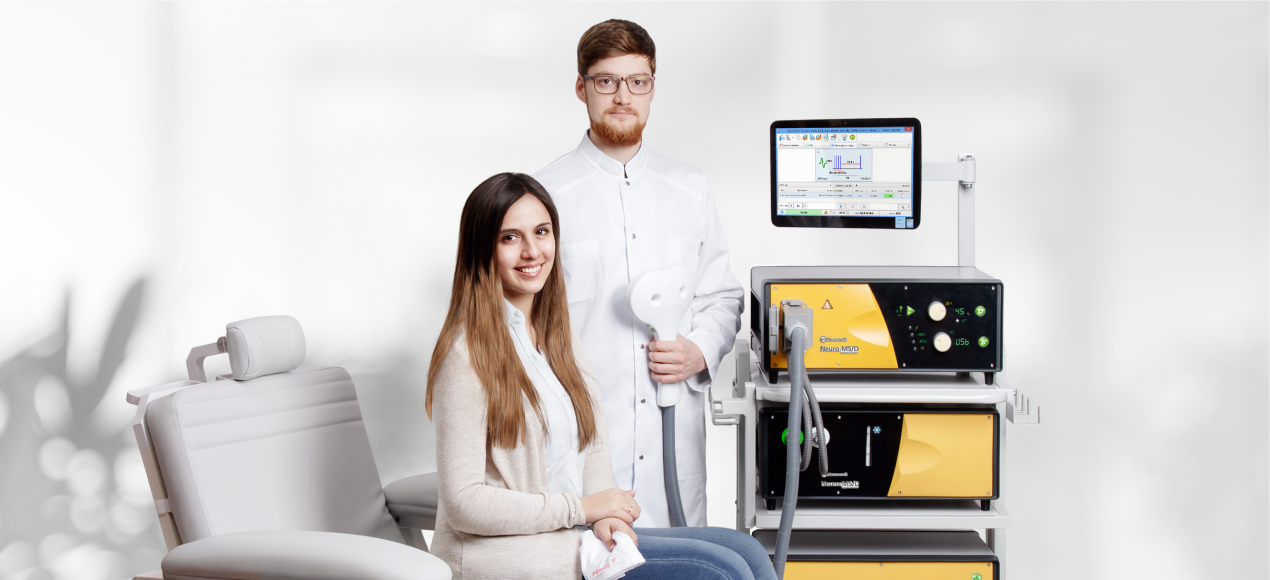
A clinical TMS visit · AI-generated educational illustration. Device appearance and positioning vary.
01 · Understand TMS
About TMS
TMS uses a coil placed against the head to deliver magnetic pulses. These pulses stimulate brain circuits involved in symptoms such as depression. No surgery is needed, and you remain awake without a general anaesthetic. [1,2]
Repetitive TMS (rTMS) gives pulses in a planned pattern. Theta-burst stimulation (including iTBS) uses a different pattern. Deep TMS uses a specially designed coil. Your team chooses the device and approach for your condition. [1]
The magnetic pulses induce a small electrical field in brain tissue. A course aims to influence networks involved in symptoms. The response differs between people, and the biological effects are still being studied. [1,8]
How does TMS work?
TMS works through electromagnetic induction, the principle described by Faraday’s law. A brief electrical pulse in a coil outside the head creates a rapidly changing magnetic field. That change induces an electrical field in nearby brain tissue; no electrode needs to be implanted. [20]
1
A pulse passes through the coil
The stimulator sends a brief electrical pulse through the coil held against the scalp.
2
The magnetic field changes rapidly
The coil produces a changing magnetic field that passes through the scalp and skull.
3
An electrical field is induced in the brain
This field can activate nerve fibres and influence connected brain networks. Repeated pulses aim to produce effects that last beyond the session. [20]
The field depends on coil design, position, orientation and stimulation intensity. A scalp mark helps place the coil; it does not describe the whole stimulation field or guarantee a clinical response. [20]
How does it differ from ECT, DBS and tDCS?
How the treatments deliver stimulation
Treatment
How it reaches the brain
Procedure
Key distinction
TMS / rTMS
Magnetic pulses from a coil outside the head induce an electrical field in brain tissue.
Awake; no surgery or general anaesthetic for standard therapeutic rTMS.
Repeated pulses target selected circuits. A seizure is not intended; it is a rare risk. [1,6,20]
ECT: electroconvulsive therapy
Brief electrical stimulation is delivered through electrodes on the scalp.
General anaesthesia and a muscle relaxant; no brain implant.
A controlled therapeutic seizure is intended. ECT has an important role in severe illness and some urgent clinical situations. [1]
DBS: deep brain stimulation
An implanted pulse generator sends electrical pulses to electrodes placed within the brain.
Requires surgery to implant the system; ongoing programming and follow-up.
Direct stimulation through implanted electrodes. Deep TMS uses an external coil and is not DBS. [1]
tDCS: transcranial direct current stimulation
A weak direct electrical current passes between electrodes placed on the scalp.
Awake; no surgery or general anaesthetic.
Weak ongoing electrical stimulation through scalp electrodes; no magnetic coil or intended seizure. [21]
These treatments differ in delivery, evidence, uses and risks. They are not interchangeable, and this comparison does not rank them. Your clinician recommends an approach based on your condition, urgency, earlier treatment and preferences.
Benefits and expectations
The aim is to reduce symptoms and improve everyday functioning. Some people improve substantially; others have a partial response or no meaningful benefit. Your team should agree which changes matter to you and how to measure them. A response means worthwhile improvement; remission means symptoms have fallen to a low level. Neither guarantees that symptoms cannot return. [1,8]
FDA-cleared and other uses
FDA clearance applies to a particular device, patient group and protocol. The examples below describe US authorisations, not a complete list or a guarantee of local availability. Your team must check current labelling. [5,9-14]
Major depressive disorder
Several systems are cleared for adult MDD, commonly after inadequate benefit from antidepressant treatment. Exact requirements vary by device. [1,10]
Depression with anxiety symptoms
Some systems include reducing anxiety symptoms in adults who have MDD. This is different from a general clearance for an anxiety disorder on its own. [11]
Adolescent depression
Certain systems have an adjunctive MDD indication for ages 15-21. This requires specialist assessment and the exact device label; it is not a general indication for all children. [10]
Obsessive-compulsive disorder (OCD)
Specific systems are authorised as an addition to treatment for adults with OCD. The treatment target and preparation differ from depression protocols. [9]
Smoking cessation
A specific Deep TMS system is indicated as an aid to short-term smoking cessation in adults. This does not establish a general indication for other addictions. [5]
PTSD: a specific system
The MeRT System received clearance in June 2026 as an adjunct for adult PTSD. This applies to that system and its compatible treatment setup, not every TMS device or PTSD protocol. [13]
Migraine: separate headache devices
TMS authorisations also include specific migraine devices. For example, the Cerena authorisation concerns acute migraine pain with aura. Headache devices and instructions differ from psychiatric rTMS treatment. [12]
Other clinical and research uses
Other conditions, such as bipolar depression, some pain conditions and selected symptoms of schizophrenia, have been studied or treated in specialist services. A use may be off-label or part of research, with different evidence and local rules. Ask what evidence supports the proposed use, whether it is within the device label, and what alternatives are available. [15]
02 · Plan treatment
How is a treatment planned?
After your doctor refers you, the TMS team reviews whether treatment fits your needs and can be delivered safely. Referral is the start of an assessment, not an automatic decision to treat. The order of mapping and threshold checks can vary between services and devices.
01
Referral and clinical assessment
The team reviews your diagnosis, current symptoms, previous treatments and response, medical conditions, medicines and goals. You may complete symptom questionnaires. This helps establish the clinical reason for TMS and a baseline for follow-up. [2,3]
02
Eligibility, safety and consent
Staff check for implants or metal near the treatment area, seizure history and other relevant risks. They discuss benefits, limitations, alternatives and practical arrangements. Some findings require further information or specialist review before a decision. You can ask questions before agreeing. [4,6]
03
Choose the treatment protocol
The clinician selects a suitable device, coil, target and pulse pattern for your condition and the evidence supporting that use. The plan also sets the course schedule and review points. Standard, accelerated and personalised approaches are not automatically interchangeable. [15]
04
Identify the treatment target
The target is a brain region or network selected for the condition being treated. The team may use scalp measurements to locate a surface point, sometimes marking a fitted cap. MRI-based navigation can guide placement in some services and protocols. [3,8,14]
05
Measure motor threshold and set intensity
Test pulses over a movement-related brain area produce a small muscle response, often in a hand and sometimes a foot. The response may be observed or recorded with skin electrodes. This motor threshold helps the clinician choose stimulation intensity for the prescribed protocol. [3,6]
06
Position the coil and begin monitoring
The team checks the external coil’s location, contact and angle, or the fit and measurements of a helmet coil. Hearing protection is provided. Staff monitor comfort and symptoms and repeat relevant checks if your health or treatment changes. [3,6]
A typical pathway. The team may complete or repeat these checks in a different order to suit the device and your needs.
Finding the target: scalp measurements, caps and MRI
Scalp-based measurements
Measurements between head landmarks help the team identify a repeatable scalp location. This estimates the surface position of a target; it does not produce an image of your brain. The chosen point depends on the protocol. [15]
Marked head caps
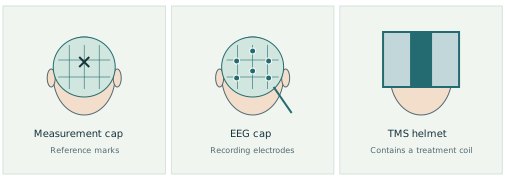
Some clinics record measurements and treatment points on a fitted cap to help reproduce positioning at later visits. A cap used for marking is not, by itself, an EEG recording device. Staff still check its fit and position each time. [3,16]
MRI-based navigation
When used, navigation links a brain scan with the position of your head and coil. Some specialised protocols also use functional MRI connectivity to select an individual target. MRI is not required for every TMS course, and navigation does not guarantee a response. [14,15]
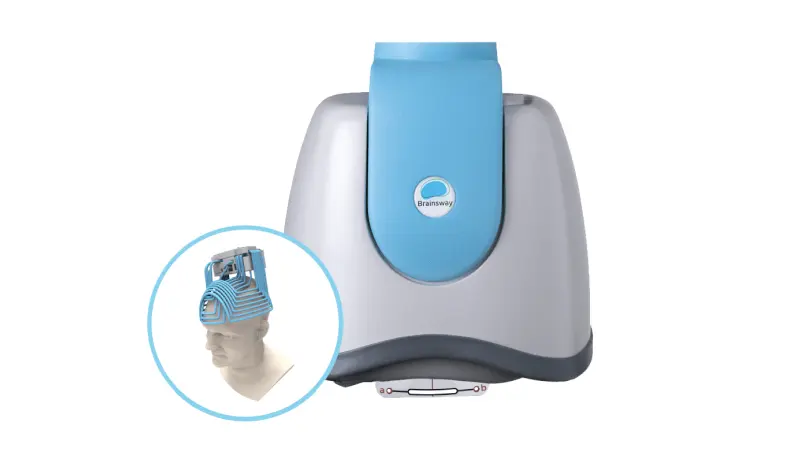
A measurement cap, an EEG cap and a Deep TMS helmet have different purposes. A measurement cap holds reference marks; an EEG cap uses electrodes to record electrical signals when that assessment is required; a Deep TMS helmet houses the stimulation coil. Not everyone needs each of these.
What does motor threshold tell us?
Motor threshold is a reference for stimulation intensity, not a test of how severe your illness is or a prediction of whether TMS will work. Your complete treatment “dose” also includes pulse pattern, number of pulses, sessions and spacing. Threshold may need reassessment after relevant clinical or medication changes; tell your team rather than adjusting treatment yourself. [6,15]
How is the coil positioned and checked?
Find the planned location
The team identifies the treatment site using scalp measurements or, when available and appropriate, a navigation system. Different conditions may use different sites.
Check the individual response
Motor threshold testing helps the team set stimulation intensity. A hand or foot response may be observed or measured using recording electrodes.
Position and support the coil
For an external coil, the team checks scalp contact, orientation and support. For a helmet, they check its fit and reference measurements. The position depends on the device and protocol.
Monitor comfort and consistency
Hearing protection is used. Tell the team about pain or movement so they can reassess comfort and positioning. Do not reposition the coil yourself.
Exact coil location and angle depend on the target, coil design, device instructions and prescribed protocol. This guide explains the clinical process; it is not an operator manual. [3,6]
03 · Explore approaches
Types of TMS and treatment courses
The coil, pulse pattern, schedule and targeting method describe different parts of a plan. A shorter stimulation session is not necessarily a shorter overall course.
Conventional rTMS
Repeated pulses are delivered in a prescribed pattern. Different pulse frequencies and treatment targets are used for different protocols. [1,15]
Theta-burst stimulation (TBS)
Pulses are grouped into brief bursts. Intermittent TBS (iTBS) can make an individual stimulation session shorter; a short session does not automatically mean an accelerated course. [1]
Figure-of-eight and Deep TMS coils
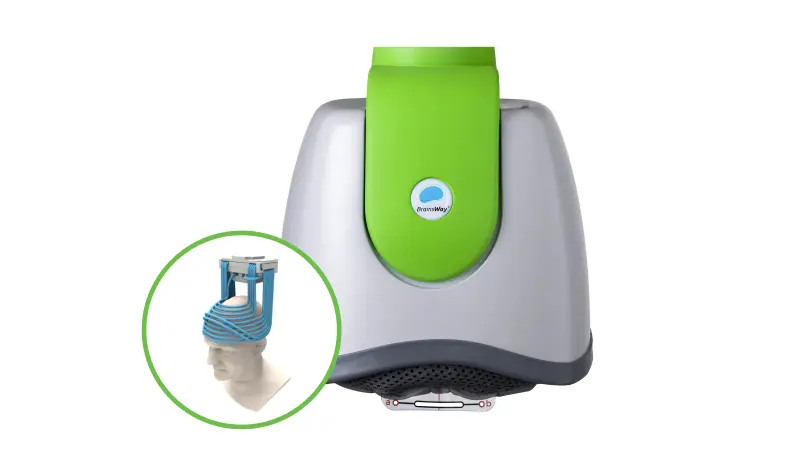
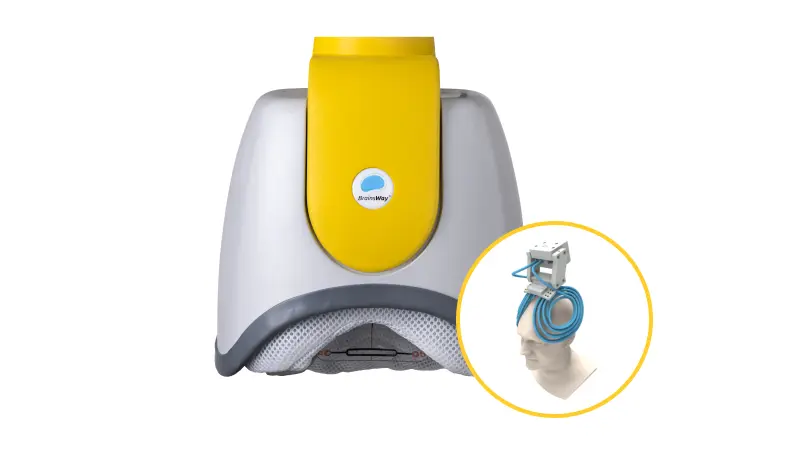
These are coil designs with different stimulation fields. Deep TMS commonly uses a helmet-like coil. A deeper or wider field is not automatically better for every person or condition. [8]
Single-pulse TMS
Single test pulses may be used during setup. Some headache devices also deliver individual pulses; these should not be confused with a psychiatric rTMS course. [3,12]
Standard, accelerated and personalised approaches
Standard / regular course
Many depression courses give one session per weekday over about 4-6 weeks. Session and visit length depend on the device, pulse pattern and setup. Your own schedule may differ. [1,2]
Accelerated course
Several sessions are given in a day with planned breaks, over a shorter course. Only certain devices and protocols have specific authorisations. It is not simply a standard course compressed at will, and quicker scheduling does not guarantee a better or faster response for everyone. [1,4,14]
Personalised treatment and targeting
Routine care is individualised through clinical assessment and motor-threshold measurement. Some systems also use MRI, brain-connectivity or EEG information for their own targeting or parameter workflow. SAINT uses an MRI-informed approach; MeRT has a specific EEG-based system. These methods are not interchangeable, and not every service offering “personalised TMS” has the same evidence. [3,13,14]
Acute sessions, continuation and maintenance
Acute treatment: the initial course
The acute course treats the current episode. Conventional depression treatment commonly involves five weekday visits per week over four to six weeks, approximately 20–30 sessions. A full course may extend to 30–36 sessions or longer after review. Your device, protocol and response determine the plan; these numbers are not a rule for every condition. [1,17]
Accelerated treatment
Accelerated protocols give more than one session per day, with specified breaks. Ask about the total sessions and days, not only the length of each stimulation session. The team must follow the prescribed protocol; session numbers for conventional treatment cannot simply be transferred to an accelerated schedule. [14,17]
Tapering and continuation
Some services reduce session frequency after an acute response or provide further sessions to help sustain improvement. This is sometimes called tapering or continuation treatment. The schedule varies; it is different from tapering medication. [17,19]
Maintenance and repeat courses
Maintenance TMS may be considered to help sustain benefit in selected people, particularly if symptoms have returned after previous courses. Evidence supports some approaches, but the best schedule is not settled and maintenance is not required for everyone. A repeat acute course for returning symptoms is another possible plan after reassessment. [17,18]
Ask for a written plan showing the initial session count, planned review dates, whether tapering is included, and what happens if improvement is partial or symptoms return. Improvement may occur later in a course; discuss progress at reviews rather than changing attendance yourself. [17,19]
Visual guide: machines and coils you may see
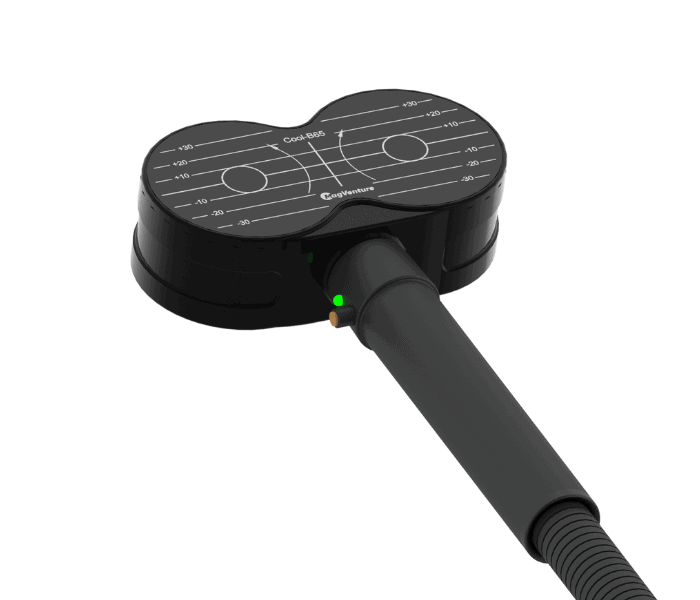
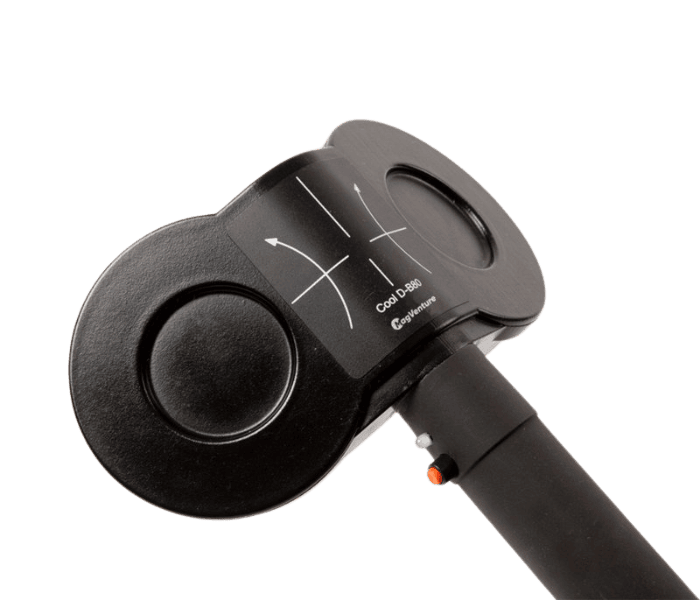
Examples for recognising equipment, not a recommendation of one brand. The stimulator, coil, software and treatment protocol must be compatible. Availability and authorised uses vary by country and system.
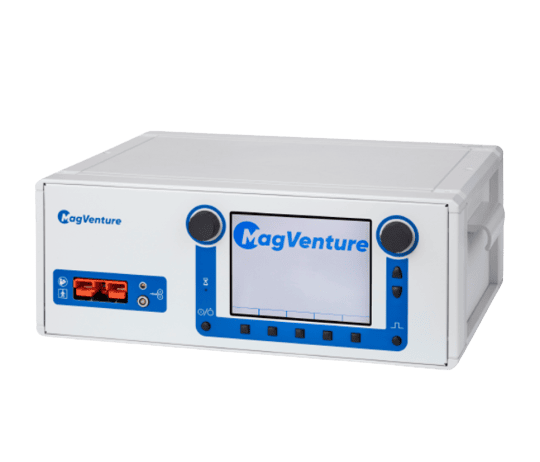
Stimulator example
MagVenture MagPro R30
A stimulator supplies the pulses to a connected treatment coil. The coil is a separate part of the system.
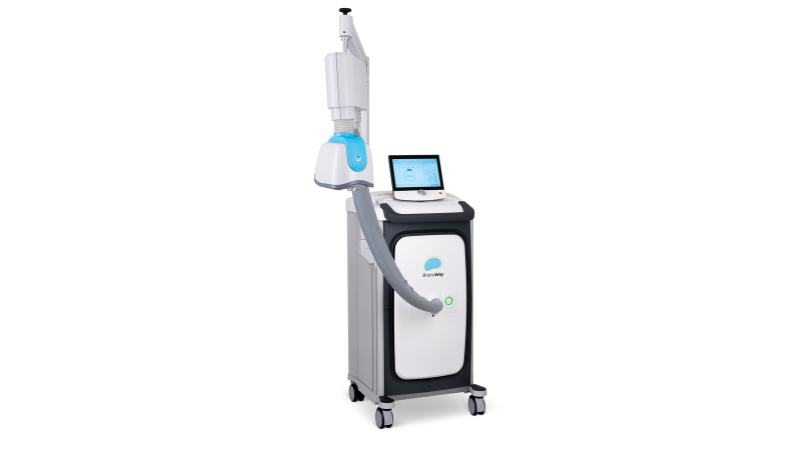
A trolley-based rTMS system with cooled coils, a positioning arm and Neuro-MS.NET software. The exact configuration and available protocols depend on the supplied system and local authorisation.
Manufacturer images are credited to their respective owners. Examples do not imply endorsement of CTDS, equivalent effects or interchangeable placement.
04 · Prepare for visits
What can I expect?
1
The first visit
Allow time for discussion, safety review, consent, baseline questionnaires and mapping. Staff explain the equipment and test pulses. The first visit is often longer than later appointments; ask for your clinic’s expected timings. [3,4]
2
During stimulation
You remain awake in a treatment chair. Expect repeated clicks, tapping and sometimes scalp or facial-muscle movement. Wear the supplied hearing protection. Tell staff about pain, dizziness or anxiety; you can ask to pause. [2,3]
3
Between sessions
Report new symptoms, poor sleep, missed medicines or changes in alcohol or drug use before treatment. Keep your prescribing and TMS teams informed of changes. Ask what to do if you miss an appointment; do not rearrange sessions on your own. [6]
4
After the visit
Many people return to everyday activities, but tiredness, dizziness, your illness and medicines may affect this. Follow individual advice about the first visit, driving and work. Ask whom to contact if a problem develops later. [3,4]
Before the first appointment
Bring your referral, earlier treatment details and a current medicine list, including supplements and non-prescription products.
Tell the team about implanted devices, operations, metal fragments, seizures, fainting, neurological illness, pregnancy and previous mood elevation. A positive answer needs review; it is not a decision you should make yourself. [6]
Discuss current self-harm thoughts or major deterioration promptly. The team must consider whether a different level of care or another treatment is needed. [6]
Checklist before each appointment
Give the team a complete medicine list, including non-prescription products and supplements. Report dose changes or missed doses. Do not stop or reduce medication on your own. [1,6]
Tell the team about seizures or fainting, head injury, neurological illness, bipolar disorder, pregnancy, hearing problems, and implanted devices or metal fragments. Bring implant details if available; the team must check compatibility. [4,6]
Report poor sleep, alcohol or recreational-drug use, withdrawal symptoms, illness and any change in health before a session. Ask the team for individual advice. [4,6]
Follow the clinic's instructions about items near the coil, hearing protection and attendance. Ask in advance about travel and arrangements for the first appointment. [3]
Ask about meals, sleep, hair products, travel and the time needed for your visit. If a measurement cap is used, the team may ask for hair to lie flat. Follow your own clinic’s preparation instructions. [4]
How much time will I need?
For conventional depression treatment, visits are often scheduled five days a week for four to six weeks. Some full courses extend to 30–36 sessions or longer. Stimulation time and total visit time differ. OCD, smoking cessation and specialised accelerated protocols use their own device-specific schedules. Ask for your prescribed session count and time commitment. [1,5,9,17]
Ask for the full visit length, travel requirements, planned breaks and review dates. Your written schedule should reflect the protocol actually prescribed.
05 · Stay informed
Side effects and safety
More common, usually temporary
Scalp discomfort, headache or twitching can occur during treatment. Some people feel tired or light-headed. Discomfort often becomes easier over subsequent sessions. Tell staff rather than trying to tolerate significant pain. [2,4]
Less common but important
A seizure is a rare serious risk. Risk depends on the person, device and treatment settings. A switch to unusually elevated or irritable mood can also occur. Tell your team promptly about a reduced need for sleep, racing thoughts, unusual energy or impulsive behaviour. [4,6]
Hearing protection
The coil makes loud clicks. Use the hearing protection provided throughout stimulation. Report new ringing, ear pain or hearing changes. [2,3,6]
When to get help
Tell the treating team promptly about new or worsening symptoms, persistent side effects or a major mood change. A seizure, severe sudden illness, or feeling unable to stay safe needs urgent local medical or emergency help. Do not wait for the next TMS appointment. CTDS is not monitored for urgent messages.
Should I continue medication after TMS?
Usually, continue your prescribed medicines and psychological treatment unless your treating clinician advises a change. Feeling better after TMS is not a reason to stop medication suddenly. Your prescriber considers the diagnosis, previous episodes, response, side effects and relapse risk when agreeing longer-term treatment. Report medication changes to the TMS team, as they may affect safety or the need to recheck motor threshold. [6,8,17]
Monitoring progress and follow-up
Track symptoms and daily life
Your team may repeat a scale relevant to your condition and ask about sleep, mood, functioning and side effects. Regular measures help distinguish a trend from day-to-day changes; the score supports a clinical review rather than replacing it. [3,15]
Review the course together
Discuss progress at the planned review points. The clinician may continue, reassess or change the plan depending on benefit, tolerability and clinical need. Completing a fixed number of sessions is not a guarantee of improvement. [15]
Plan ongoing care
Agree what happens after the course: continuing medication or therapy, follow-up appointments, early warning signs and whom to contact if symptoms return. Further or maintenance TMS is an individual decision, with evidence and availability differing across conditions and protocols. [8,15]
06 · Find answers
Frequently asked questions
Is TMS the same as ECT?
No. Standard therapeutic rTMS is delivered while you are awake and does not aim to cause a seizure. ECT uses anaesthesia and a controlled therapeutic seizure. They have different roles; ask which treatment fits your situation. [1]
Will it hurt or affect my memory?
Tapping can be uncomfortable, especially at first. Tell the operator if it hurts. Memory loss is not a typical rTMS side effect, but report any new difficulty with memory or thinking. [2,7]
Can I drive, work or study afterwards?
Many people resume usual activities after a session. Ask about the first visit and your own illness, medicines and local driving rules. Do not drive if tired, dizzy or otherwise unsafe. [2,3,4]
Do I keep taking my medicines?
Usually, continue your prescribed medicines and psychological treatment unless your treating clinician advises a change. Feeling better after TMS is not a reason to stop medication suddenly. Your prescriber considers the diagnosis, previous episodes, response, side effects and relapse risk when agreeing longer-term treatment. Report medication changes to the TMS team, as they may affect safety or the need to recheck motor threshold. [6,8,17]
When will I know whether it is helping?
Timing varies. Keep the planned reviews and discuss changes in symptoms and daily functioning. Do not assume an early lack of change means treatment has failed, or that completing a course guarantees benefit. [1,2]
What happens after treatment?
Agree an ongoing-care plan before the last session. This usually includes clinical follow-up and decisions about medicines and therapy; selected people may also have continuation or maintenance TMS. Ask which warning signs should trigger an earlier review. There is no single maintenance schedule for everyone. [17,18,19]
Will I need an MRI or EEG?
Not routinely for every course. Some targeting systems need MRI, and certain specialised approaches use EEG or other information. Ask which tests your protocol requires and why. A marked measurement cap alone does not record EEG. [3,13,14]
Why does the team measure a thumb or foot response?
The movement area provides a measurable response to test pulses. This motor threshold is used as a reference for intensity; the treatment target may be somewhere else. It does not measure illness severity. [3,6,15]
Is a helmet or deeper coil always better?
No single coil design is best for every condition or person. Devices differ in stimulation field, evidence, authorised use and setup. Ask why the proposed system is appropriate for your diagnosis. [8,15]
What if I miss a session or feel worse?
Contact the treating service for a revised plan rather than making up sessions yourself. Report worsening symptoms promptly. If you cannot stay safe or have a severe sudden illness, seek urgent local help instead of waiting for the next appointment.
Questions for your treating team
Why is this treatment being suggested for me, and what are my alternatives?
Which device and protocol will be used, and how much time should I allow?
What risks matter in my situation, and whom should I contact between sessions?
How will we measure progress and plan follow-up?
How will you locate my treatment target, and will you use a measurement cap or MRI navigation?
What would lead you to repeat the motor threshold check or reconsider the treatment plan?
Patient and family resources
Your TMS handbook
Download the illustrated guide to how TMS works, treatment planning, preparation, safety and follow-up. Includes a clickable contents page and information sources.
14-page PDF · Updated 23 October 2026 · For patients and families
Numbered sources support the topics above. These resources do not endorse CTDS. Eligibility, availability and device requirements can differ between countries and services.
 CTDS